 Posted by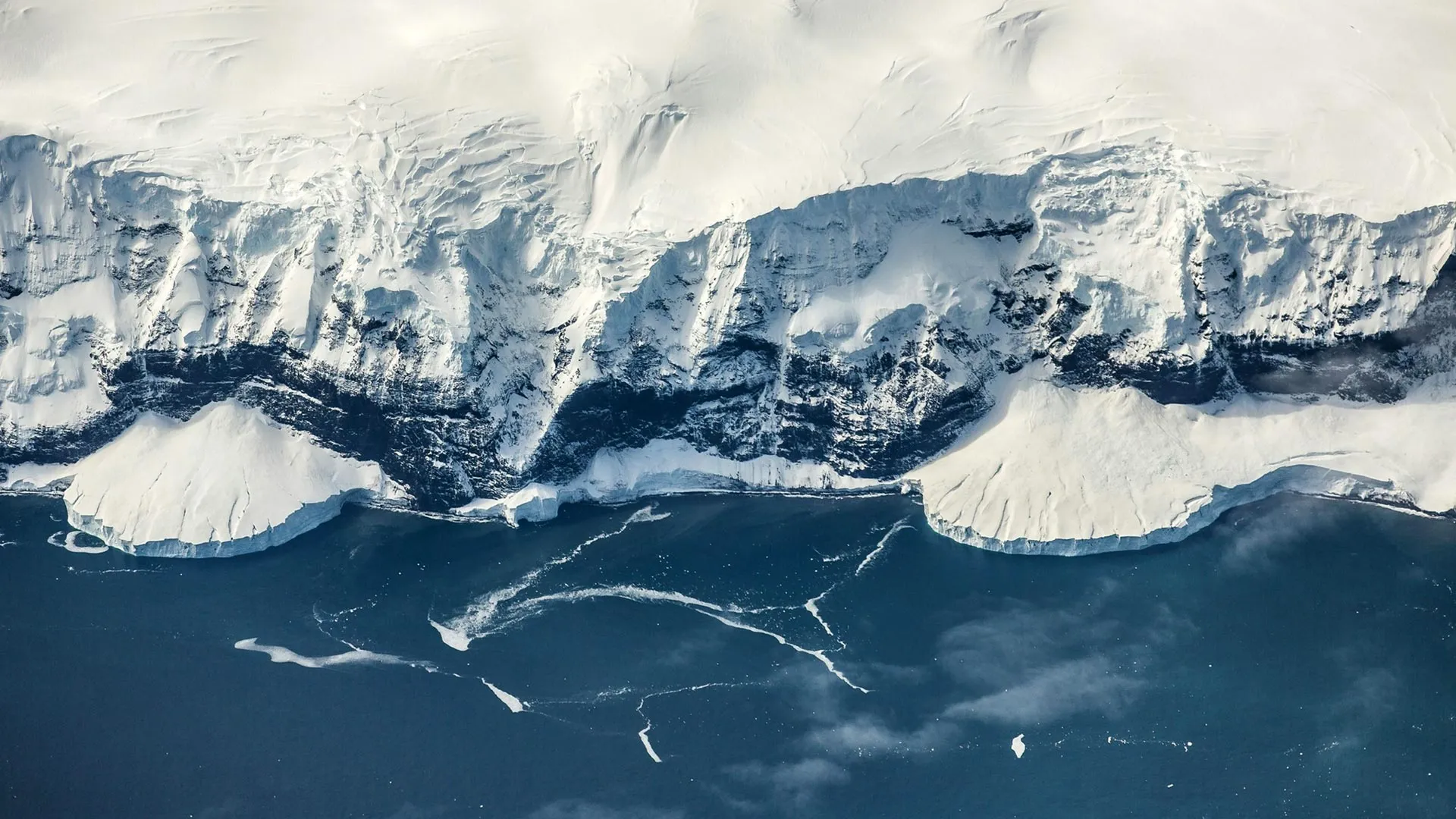

Scientists have found a new explanation for why Antarctica became covered in ice millions of years before the Arctic.

The international study, published in Science, addresses a long-standing climate mystery: how Antarctica could develop a massive ice sheet at a time when Earth was around 5ºC warmer than it is today.
The findings point to the gradual formation of high terrain in East Antarctica. As an escarpment, plateau, and mountain system rose, it created elevations cold enough for snow and ice to persist and build up over time.
The process began after Antarctica and Africa started separating during the Jurassic Period, 201-143 million years ago. Powerful forces deep inside Earth gradually lifted much of East Antarctica over more than 100 million years, helping set the stage for ice sheet formation about 34 million years ago.
The study was led by researchers at the University of Southampton, working with scientists from Durham University, GFZ Helmholtz Centre for Geosciences in Germany, the University of Potsdam in Germany, Utrecht University in the Netherlands, and the University of Florence in Italy.
Lead author Thomas Gernon, Professor of Earth Science at the University of Southampton, explained: “Antarctica’s land surface was gradually lifted to the point where ice could gain a permanent foothold, even while the surrounding polar oceans as well as global temperatures remained surprisingly warm.”
The East Antarctic Ice Sheet is now the largest ice sheet on Earth. It contains enough frozen water to raise global sea levels by around 52 meters if it were to melt completely.
Simulating 100 Million Years of Antarctic Uplift
To understand how the landscape changed, the researchers used computational models to reconstruct the evolution of East Antarctica’s surface across 100 million years.
Their results suggest that a phenomenon known as ‘mantle waves’ was responsible for much of the gradual uplift.
Mantle waves were recently identified by Prof Gernon’s team. They travel beneath continents after tectonic plates begin to separate and have previously been linked to the eruption of diamond volcanoes and mysterious phases of uplift within continents.
As these slow-moving waves passed beneath East Antarctica, they helped raise a vast plateau topped by the Gamburtsev Mountains. The recent discovery of mantle waves gave researchers a mechanism that could explain how Antarctica reached elevations high enough to begin freezing.
The simulations indicate that by about 45 million years ago, large parts of East Antarctica had climbed above the critical elevation, about 2 km, required for mountain glaciers to develop and expand. Over time, those glaciers grew together to form the East Antarctic Ice Sheet.
Dr. Thea Hincks, Senior Research Fellow at the University of Southampton who co-led the study, said: “We found that our models can realistically capture the evolution of the two-kilometer-high coastal escarpment, elevated plateau and inland mountains, eventually seeding the East Antarctic Ice Sheet.”
Why Antarctica Froze Before the Arctic
The results may also explain why the two polar regions followed very different paths.
Antarctica became heavily glaciated around 34 million years ago, while large ice sheets in the Northern Hemisphere did not form until approximately the past five million years.
Falling levels of carbon dioxide (CO2) in the atmosphere are widely considered an important trigger for Antarctic glaciation. However, the earliest Antarctic ice sheets began developing while the global climate was still relatively mild.
Prof Gernon explained: “If falling levels of CO2 acted alone, you would expect the poles to respond more symmetrically. Instead, Antarctica gained a major head start because geological processes had raised land to higher elevations, making it colder.”
How the Gamburtsev Mountains Helped Ice Survive
Even relatively modest changes in mountain elevation can determine whether snow disappears during summer or remains long enough to accumulate from one year to the next.
Before 50 million years ago, most of the Gamburtsev Mountains were lower than 1.5 km. By 34 million years ago, however, nearly half of the range had risen above 2 km. At those heights, conditions were cold enough for snow and ice to survive throughout the year and gradually develop into an ice cap.
Dr. Guy Paxman, Royal Society University Research Fellow at Durham University and study co-author, explained: “Topography is fundamentally important for glaciation. Air temperatures can drop by up to 1ºC for every 100 meters of altitude gained.”
Once the ice sheet began expanding, additional climate feedbacks strengthened the cooling.
Dr. Philip Goodwin, climate physicist at the University of Southampton and study co-author, added: “As the ice sheet expanded, its bright surface reflected more sunlight back into space, cooling the region further.”
The researchers estimate that this process, known as the ‘ice-albedo effect’, reduced global temperatures by about 1ºC. Even that additional cooling was not enough to create major ice sheets in the Northern Hemisphere. Arctic landmasses remained largely free of ice because they were generally at lower elevations.
Cooling Feedbacks Helped Ice Spread Across Antarctica
As Antarctica cooled, another feedback began to reinforce the temperature decline. Colder air can hold less water vapor, which normally acts like an insulating blanket around Earth. As the atmosphere became drier, that insulating effect weakened, and temperatures dropped further.
“Together, these feedbacks allowed the Antarctic ice sheet to spread from the mountains across the continent, eventually reaching the coast,” added Dr. Goodwin.
The findings could reshape how scientists think about the origins of major ice ages. Rather than climate alone determining when ice sheets form, geological forces deep inside Earth may first have to prepare the landscape by raising it to elevations where permanent ice can survive.
“Our findings reveal that the Earth’s interior preconditions landscapes to glaciation, determining when and where major climate transitions like the glaciation of Antarctica become possible,” explained Prof Gernon. “That’s incredibly important for understanding Earth’s ancient ice ages as well as future tipping points in the climate system.”
The research was made possible by the support of the WoodNext Foundation, a fund of a donor-advised fund program.